Why High-Quality Concrete Matters for Large Industrial Slabs
The Importance of High-Quality Concrete for Industrial Projects
On a residential pour, a minor inconsistency in the mix might show up as a simple surface flaw. On a large industrial slab, that same inconsistency can compromise structural integrity across thousands of square feet, create cracking that undermines the entire floor system, and result in costly repairs or downtime for the facility it supports. Quality in concrete is not just a preference at an industrial scale; it is a structural requirement.
What Sets Industrial Slabs Apart
Industrial slabs operate under conditions that residential and most commercial concrete never encounters. A warehouse floor supporting heavy racking systems, forklifts, and pallet jacks must withstand repeated point loads concentrated in specific areas for years at a time. A factory floor may be subject to vibration, chemical exposure, temperature fluctuations, and equipment anchoring that creates ongoing stress on the slab.
The scale alone changes the stakes. A residential driveway might cover a few hundred square feet, whereas an industrial slab for a distribution center or manufacturing facility can cover tens of thousands. At that scale, every decision made about mix design, delivery timing, and placement has consequences that multiply across the entire pour. Getting it right requires careful planning, the right mix formulation, and a supplier with the capacity and consistency to deliver at volume.
How Concrete Quality Affects Industrial Slab Performance
Industrial slabs are typically engineered to meet specific compressive strength requirements based on the load they will carry and the use they will see. That strength is only achievable if the concrete itself is properly formulated and delivered in a condition that allows it to cure correctly.
Fresh concrete that arrives at the right consistency is workable enough to place and finish properly, but not so wet that it loses strength during the hydration process. Concrete that has been sitting too long or has been diluted to improve workability directly loses compressive strength. For an industrial slab expected to hold up under forklift loads or heavy machinery for decades, that tradeoff is unacceptable.
Consistency across the entire pour matters just as much as the quality of any individual batch. An industrial slab poured with concrete from two different suppliers, with different mix formulations, or even from batches made under different weather conditions, can develop differential cracking as sections cure at different rates or to different strengths. Managing that consistency requires a supplier with controlled batching and the capacity to deliver multiple loads in sequence without gaps.
Mix Formulation for Industrial Applications
Not every industrial application calls for the same mix. Bos Concrete formulates ready-mix concrete to match the specific demands of each project—whether that means a high-strength mix for a facility with heavy point loads, a mix with specific workability characteristics for a large flat slab, or a formulation that accounts for placement in a hard-to-access area.
Slump, which measures the workability of a fresh concrete mix, is a key variable in industrial pours. A mix with the right slump for the application makes placement and finishing more precise, reducing the risk of shrinkage cracking during the curing process. Getting that specification right before the trucks roll means fewer problems during and after the pour.
Bos Concrete's in-house laboratory tests key properties—including strength, workability, and durability—on every project, ensuring quality control is built into the batching process rather than applied after the fact. Every batch delivered to a Kalamazoo-area industrial job site is made to meet the exact specifications the project demands.
Southwest Michigan Weather & Industrial Pours
Southwest Michigan's climate adds a layer of complexity to large industrial concrete pours that contractors and facility managers must plan for. Cold temperatures in the fall and winter months affect how concrete sets and cures. When temperatures drop below freezing, water in the mix can freeze before the hydration process completes, which reduces final strength and can cause scaling or cracking at the surface.
Hot summer temperatures create the opposite problem. Rapid evaporation from heat and direct sun accelerates the surface cure while the interior is still hydrating, leading to surface cracking if the pour is not managed correctly. High humidity and rain during a pour can also introduce excess water into the mix, throwing off the water-to-cement ratio.
Timing and coordination with the concrete supplier are essential for managing weather variables on a large pour. Bos Concrete works with contractors throughout Southwest Michigan to plan delivery schedules that account for weather conditions, and our team adjusts mix formulations whenever conditions warrant.
Why Delivery Consistency Matters at Scale
A large industrial slab typically cannot be poured in a single truckload. Multiple deliveries need to arrive on a coordinated schedule so each load is placed before the previous one begins to set, ensuring a monolithic slab without cold joints between sections.
Cold joints, which form when fresh concrete is placed against concrete that has already begun setting, create structural weak points. On a floor that will carry industrial loads, a cold joint is a crack waiting to happen. Preventing them requires a supplier with the fleet and dispatch coordination necessary to keep trucks arriving on schedule across the full duration of the pour.
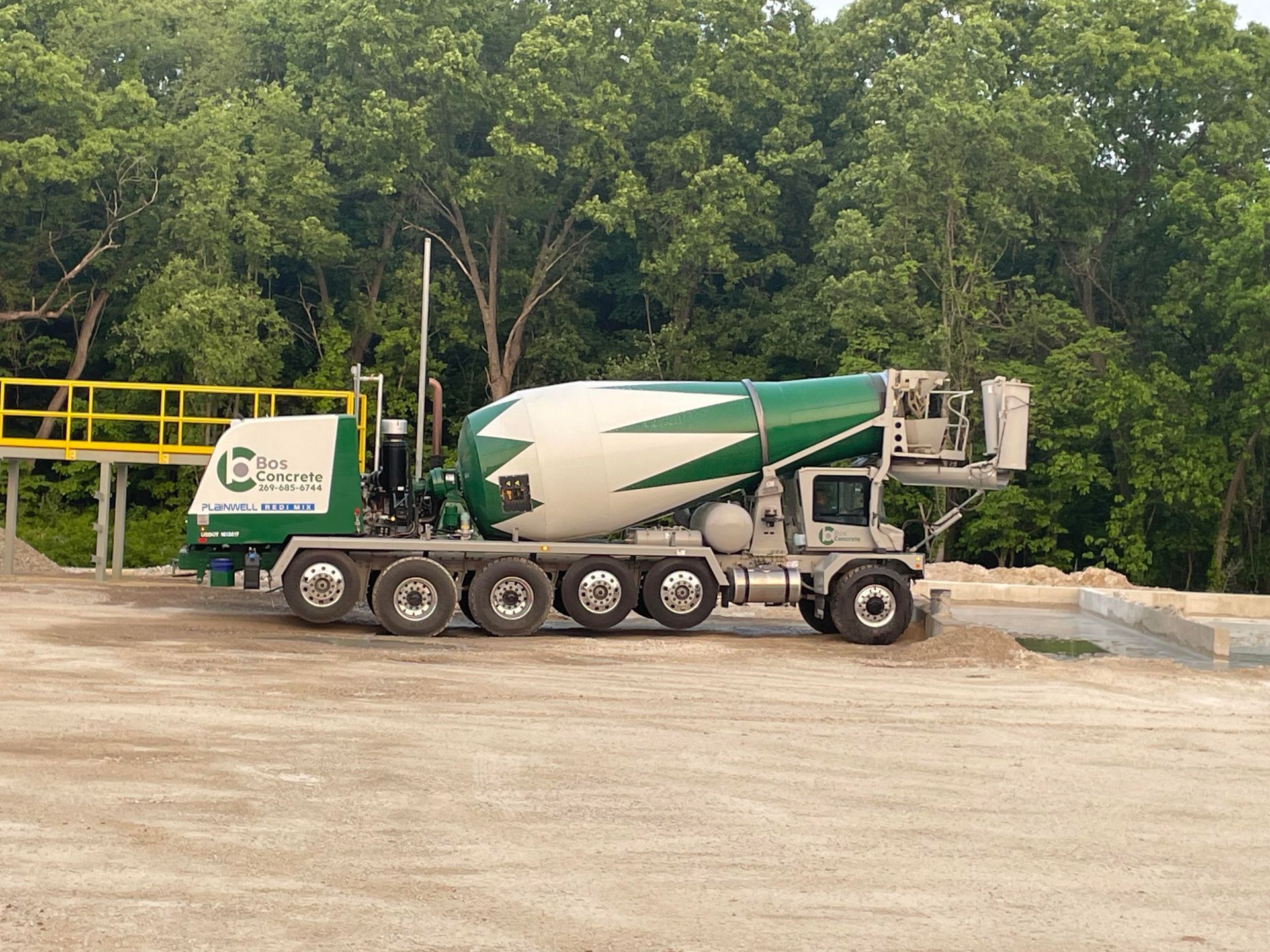
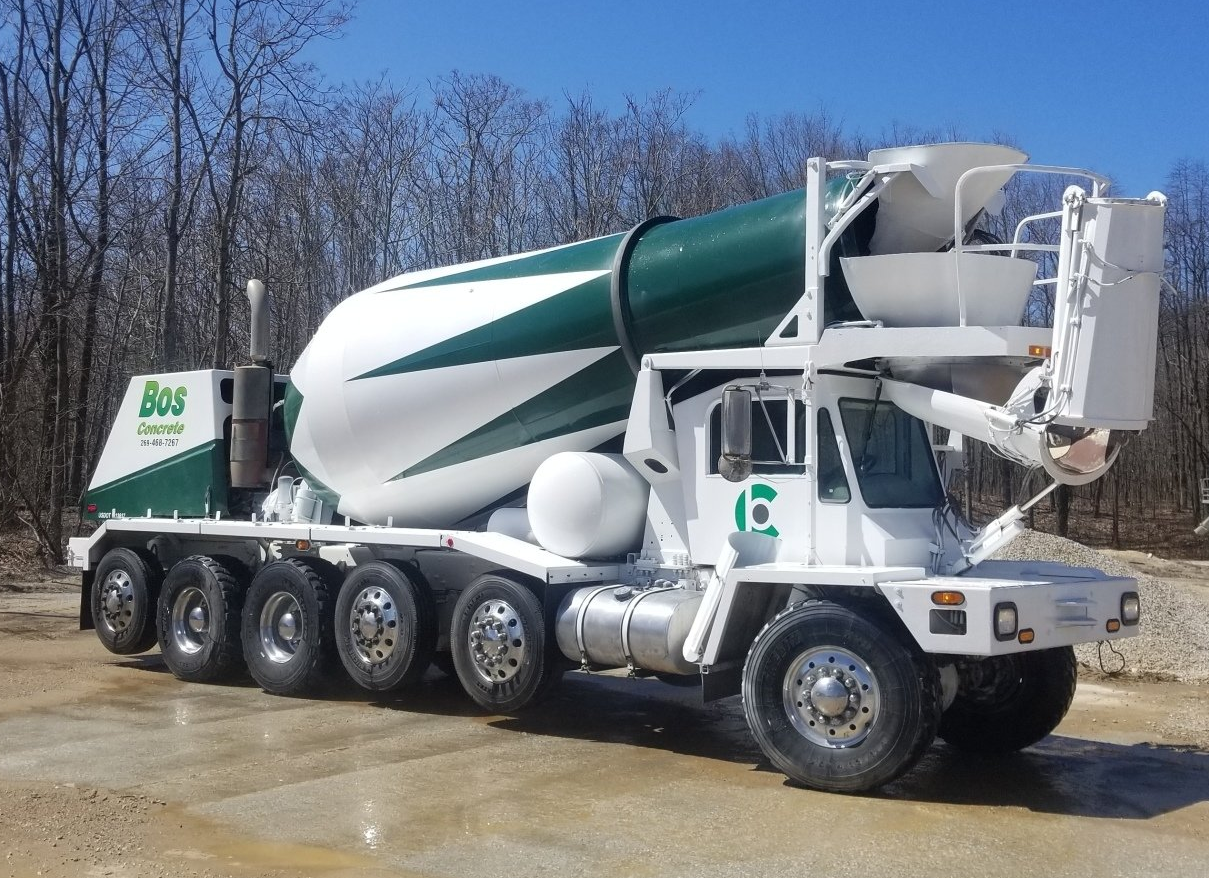
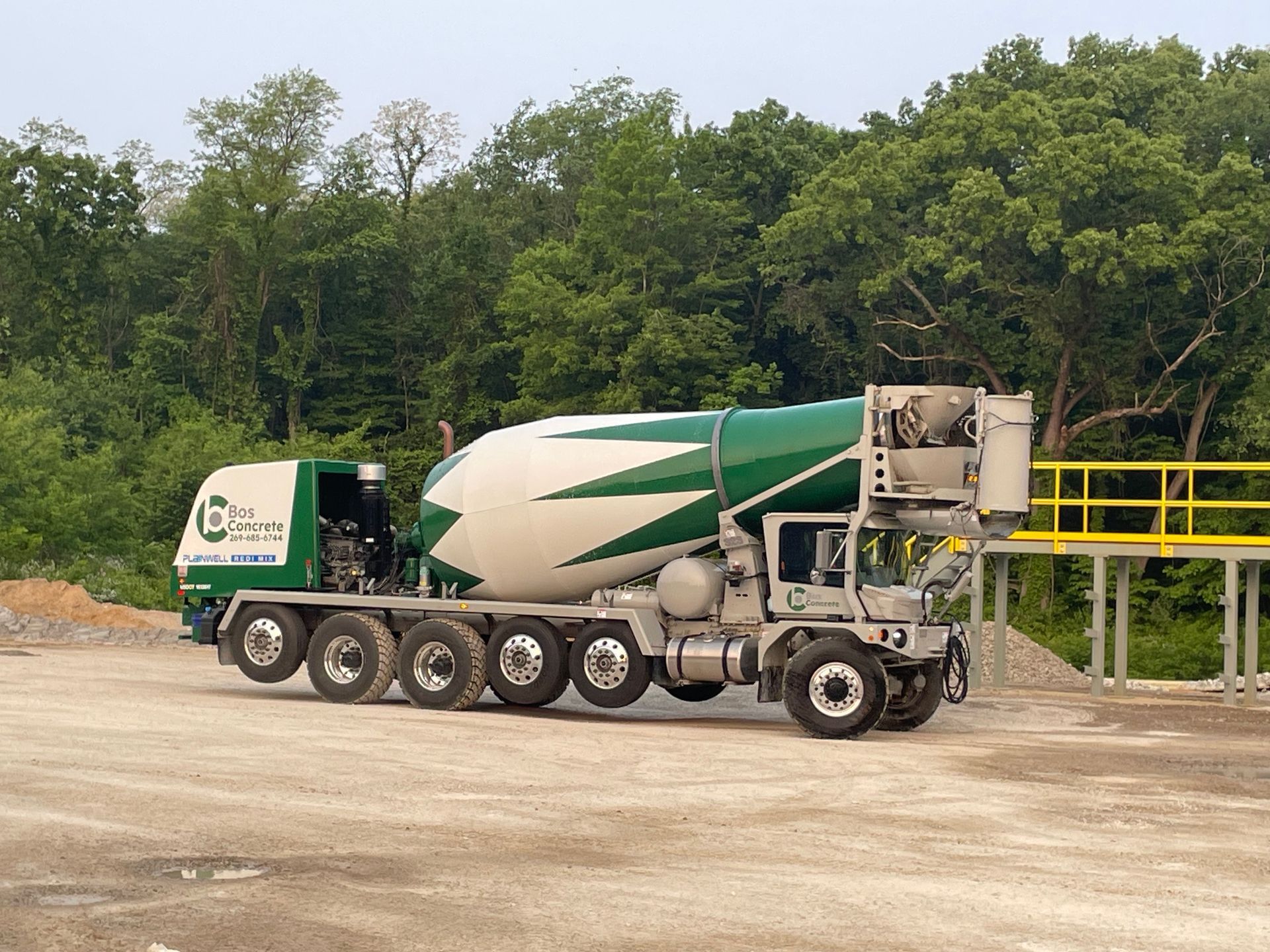
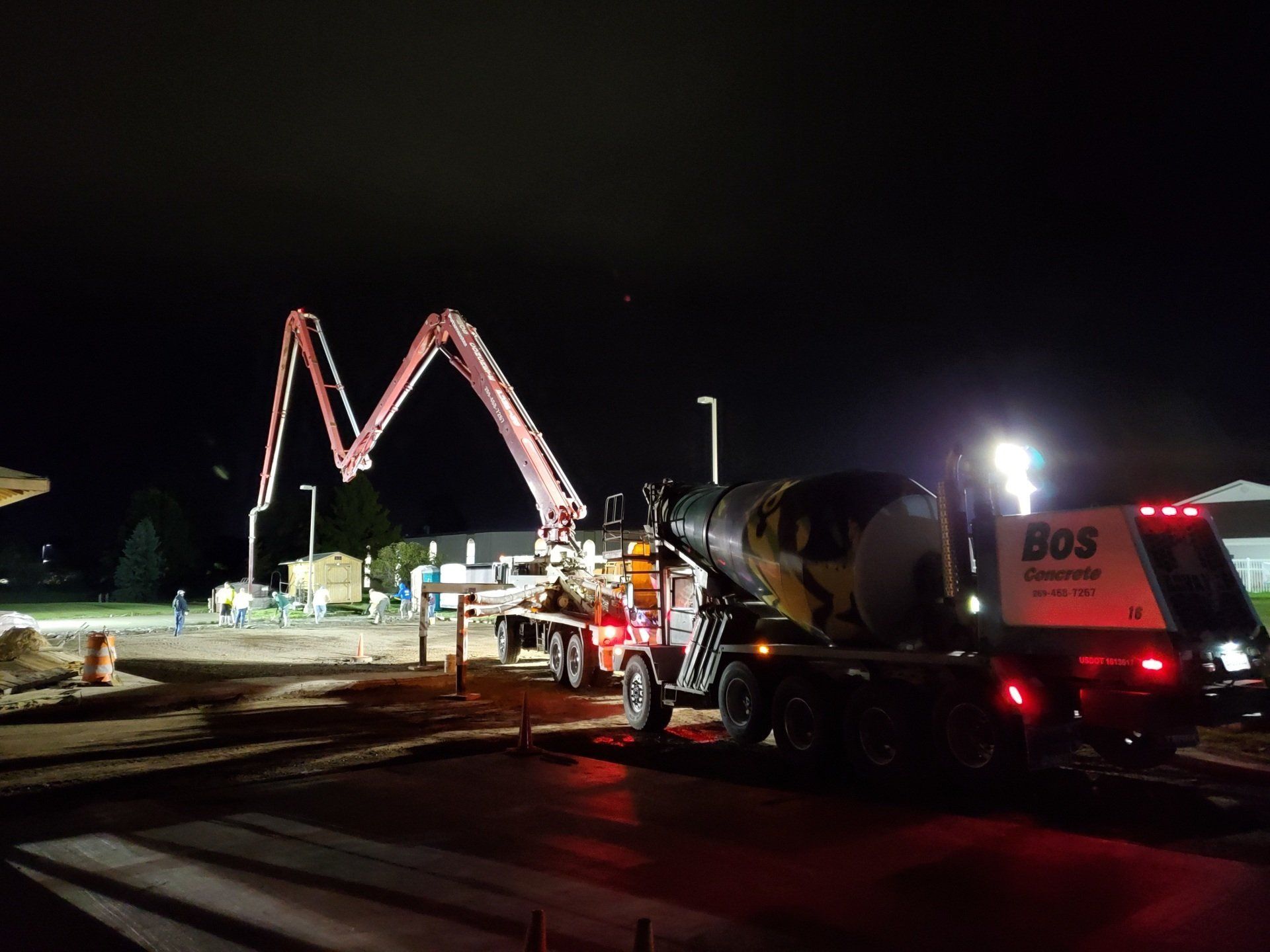
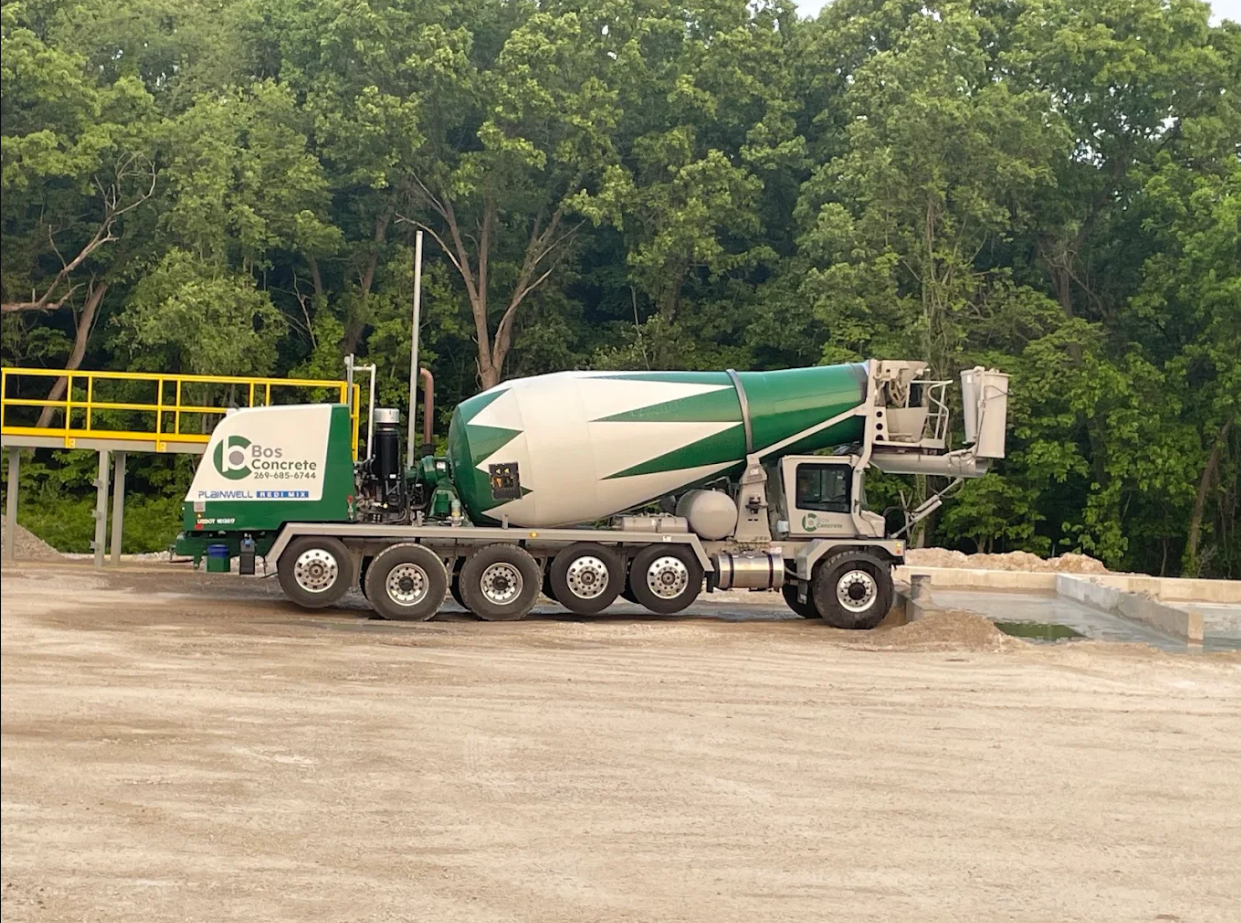
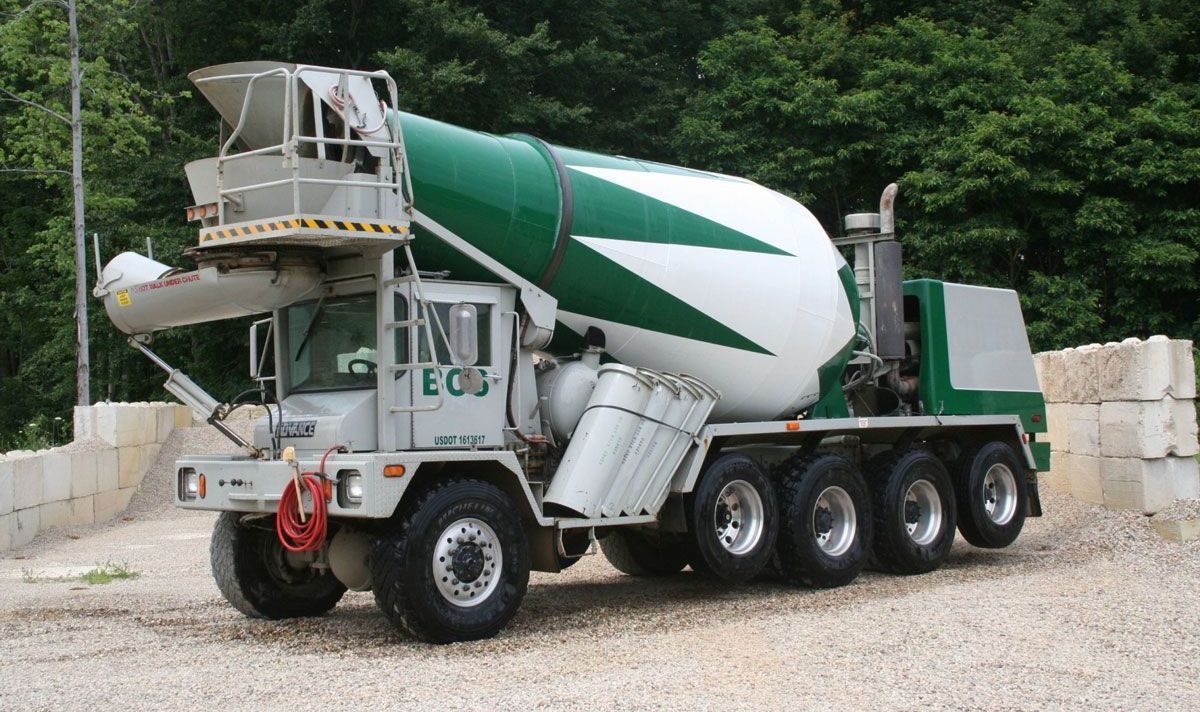
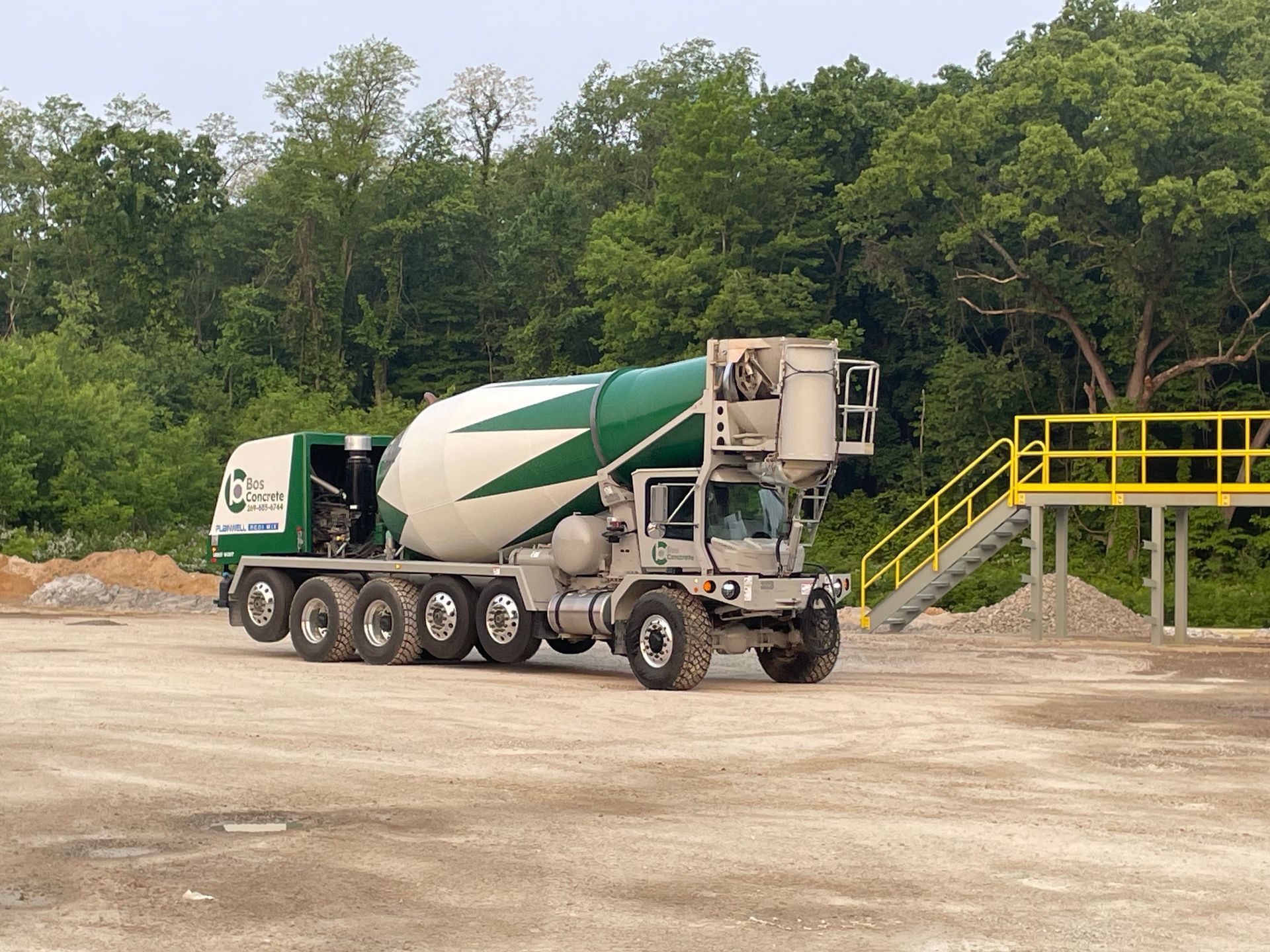
Bos Concrete operates a large fleet of ready-mix trucks out of four Southwest Michigan locations, including Kalamazoo, which allows our team to coordinate high-volume pours without the gaps that create cold-joint risks. For slabs in hard-to-access areas or elevated structures, boom pump service is available with 38-meter Z-boom pumps capable of reaching tight corners, deep basements, and elevated placements where a truck chute cannot reach.
Industrial Concrete Delivery in Kalamazoo & the Southwest Michigan Area
Bos Concrete has been supplying ready-mix concrete to industrial, commercial, and residential projects across Southwest Michigan since 2000. With over 20 years of experience, four regional locations, custom mix formulations, in-house quality control testing, and a fleet sized for large-volume pours, our team is built for the demands of industrial slab work in the Kalamazoo area.
Contact Bos Concrete today for a free estimate on your industrial slab project. Serving Kalamazoo, Benton Harbor, South Haven, Paw Paw, and communities throughout Southwest Michigan.