Understanding Concrete PSI & Strength Requirements for Industrial Projects in Michigan
Concrete PSI Explained: Strength Standards for Michigan Industrial Construction
Concrete PSI and compressive strength are foundational considerations for any industrial project in Michigan. Selecting the right strength affects durability, safety, lifecycle costs, and regulatory compliance. This overview explains key concepts, relevant codes, and practical considerations for owners, engineers, and contractors operating in Michigan’s climate and industrial contexts.
What Are Concrete PSI Ratings and Why Do They Matter for Industrial Projects in Michigan?
Concrete PSI (pounds per square inch) measures compressive strength—how much load concrete can bear before failing. For industrial facilities, PSI selection correlates directly with expected loads (static and dynamic), equipment weight, traffic, chemical exposure, and freeze-thaw cycles common in Michigan. A higher PSI generally yields greater compressive strength and lower permeability, improving resistance to heavy loads and aggressive environments. However, strength must be balanced with constructability, curing time, and cost. Engineers specify PSI to meet structural demands and service-life expectations rather than aiming for the highest possible number.
How Do Strength Requirements Vary for Different Industrial Uses?
Industrial strength requirements differ by application: warehouse floors subject to forklift traffic, heavy machinery pads, mezzanine supports, and exterior pavements all impose unique demands. Typical industrial floor slabs range from 3,500 to 5,000 PSI for standard warehouse and manufacturing uses; heavy-duty applications (overhead cranes, heavy presses, concentrated loads) may require 6,000 PSI or higher, plus specialized reinforcement.
Considerations include slab thickness, jointing strategy, steel or fiber reinforcement, and load distribution. Environmental exposure—freeze-thaw cycles, deicing salts, and chemical spills—also influences specifications, often necessitating lower-permeability mixes and air entrainment for durability in Michigan climates.
What Michigan Standards and Codes Govern Concrete Strength?
Michigan projects must comply with applicable building codes and standards adopted at the state and local levels, including the International Building Code (IBC) and American Concrete Institute (ACI) standards referenced therein. ACI 318 provides structural design requirements, while ACI 301 addresses specifications for concrete construction. Local jurisdictions and agencies (municipalities and MDOT for transportation-related work) may impose additional requirements for testing, curing, and acceptance criteria.
Contract documents and project specifications should reference these standards and outline compressive strength milestones, testing frequency, and acceptance thresholds to ensure compliance and long-term performance.
Key Factors to Consider When Specifying Concrete PSI for Michigan Industrial Projects:
- Projected Loads: live loads, point loads, dynamic impacts, and equipment wheel loads.
- Environmental Exposure: freeze-thaw cycles, salt exposure, chemical contact, and moisture.
- Service Life Expectations: design life, maintenance intervals, and long-term performance goals.
- Mix Design Characteristics: water-cement ratio, admixtures, supplementary cementitious materials, and air entrainment for durability.
- Permeability and Durability: lower permeability reduces the risk of freeze-thaw damage and chemical ingress.
- Reinforcement Strategy: rebar, welded wire reinforcement, or synthetic fibers to control cracking and distribute loads.
- Curing and Construction Schedule: proper curing methods and time to reach the specified strength before loading.
- Testing and Acceptance: cylinder or core testing protocols, frequency, and acceptance criteria.
- Site Conditions: subgrade preparation, drainage, and vapor barriers affecting slab performance.
- Regulatory and Contract Requirements: applicable codes, MDOT or local specifications, and owner-mandated standards.
How Can You Ensure Specified Concrete Strength Is Achieved On-Site?
Ensuring specified PSI requires coordination among design professionals, material suppliers, and contractors. Clear contract specifications should define mix designs, testing frequency, accepted tolerances, and corrective actions for nonconforming results.
On-site quality control—pre-pour inspections, batching verification, proper placement, and curing—helps the concrete attain target strengths. Independent testing of cylinders or cores at critical milestones provides objective assurance. Communication of environmental constraints (such as cold-weather concreting in Michigan) and adherence to recognized standards (ACI and ASTM) are essential to meet performance goals and protect the investment over the facility’s service life.
Are You Managing a Concrete Project in Kalamazoo & Southwest Michigan?
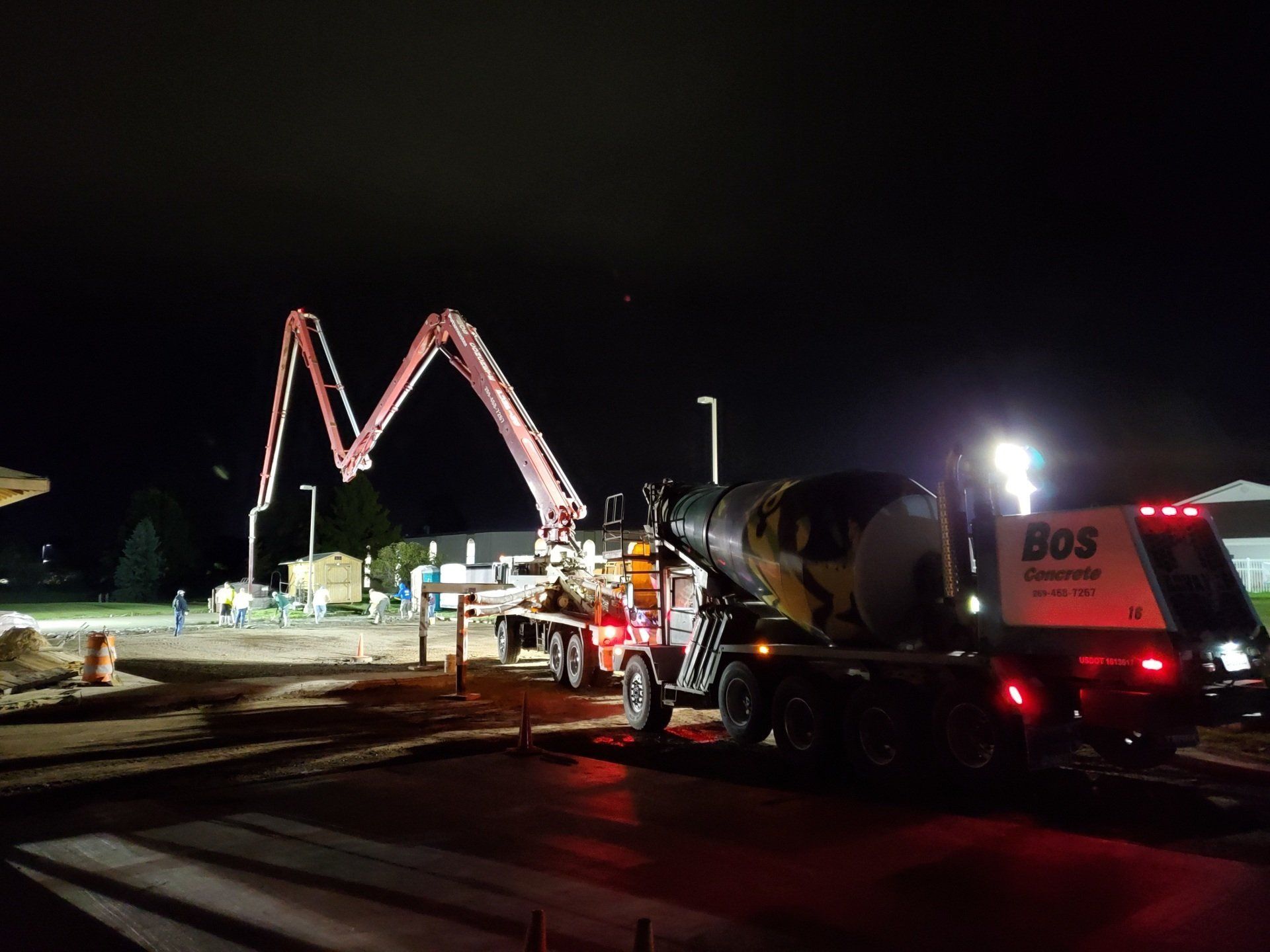
If you are a project manager who needs a concrete pour in Kalamazoo, South Haven, St. Joseph, or Paw Paw, MI, contact us at Bos Concrete. We have been sourcing ready-mix concrete in Kalamazoo and Southwest Michigan for more than 25 years. We also have trucks that can pump concrete into the most unique places. Most construction companies and the managers who oversee their projects depend on Bos Concrete for ready mix because our mix is consistent and reliable.