How to Care for Newly Poured Concrete
Helpful Tips for Maintaining Freshly Poured Concrete
Pouring concrete is a crucial step in constructing driveways, sidewalks, patios, and other outdoor structures. However, the pouring process is just the beginning. Properly caring for your newly poured concrete is essential to ensure it cures correctly, achieves maximum strength, and maintains its appearance over time. Follow these guidelines to keep your concrete in excellent condition during the critical initial days and weeks.
Understanding the Curing Process
Concrete curing is a chemical process called hydration, where water reacts with cement particles to form a strong matrix. Proper curing is crucial because it significantly impacts the final strength, durability, and appearance. Typically, concrete reaches approximately 70% of its strength within the first seven days and continues to cure for up to 28 days or longer.
Immediate Care After Pouring
Once the concrete has been poured and finished, the initial phase is the most delicate. During the first 24 to 48 hours, the concrete is susceptible to damage from dehydration, temperature fluctuations, and mechanical stress.
Keep It Moist
The key to successful curing is ensuring the concrete remains moist. Lack of water can cause surface cracks and weaken the structure.
- Cover the concrete with plastic sheeting or damp burlap.
- Mist the surface regularly with water if covering isn’t feasible.
- Avoid allowing the surface to dry out or become too wet, as this can lead to surface scaling.
Protect from Weather
Extreme weather conditions can impede curing:
- Hot Weather: Concrete may dry out rapidly, increasing the risk of cracking. Use shade cloths and frequent water misting.
- Cold Weather: Freezing temperatures can affect hydration. Use insulating blankets or heated enclosures when necessary.
Prevent Mechanical Damage
Avoid walking or driving on the fresh concrete during this critical period—typically the first 24 to 48 hours after placement. Keep heavy equipment and debris away to prevent surface disruptions.
Maintaining Proper Moisture During Curing
Consistent moisture levels are essential for at least the first 7 days—and ideally up to 14 days—to achieve maximum strength.
- Re-moisten the surface daily, especially in hot or windy conditions.
- Use a gentle spray to avoid displacing surface mortar.
Long-Term Care and Maintenance
Concrete continues to cure and strengthen beyond the initial two weeks, so ongoing maintenance is necessary to preserve its condition.
Sealing the Concrete
Applying a quality sealant after the concrete has fully cured (usually after 28 days) can protect against water, stains, and wear.
Regular Cleaning
Keep the surface clean by sweeping away debris and washing with mild soap and water. Avoid harsh chemicals that could damage the surface.
Crack Prevention and Repair
Inspect the surface periodically for cracks or chips:
- Fill small cracks promptly with concrete patching compounds.
- Avoid heavy impacts and repetitive stress on the surface.
Summary of Care Tips
- Keep the concrete moist for at least 7 to 14 days.
- Protect from extreme weather conditions.
- Avoid heavy loads or traffic early on.
- Seal and clean regularly for longevity.
- Address cracks early to prevent further damage.
Proper care during the initial curing phase and beyond will ensure your newly poured concrete remains strong, durable, and visually appealing for years to come. Taking these simple steps can save you time and money on repairs and help you achieve a beautiful finished product.
Common Mistakes to Avoid
Many homeowners make simple mistakes that can compromise the strength and appearance of their concrete. Avoid walking or driving on fresh concrete for at least 48 hours. Don’t let it dry out prematurely by skipping regular moistening, and never apply sealers too early, as this can trap moisture inside. Also, resist the urge to add finishing touches or modifications during the curing period, as this can cause surface damage or uneven curing.
Do You Need Concrete Poured in Southwest MICHIGAN?
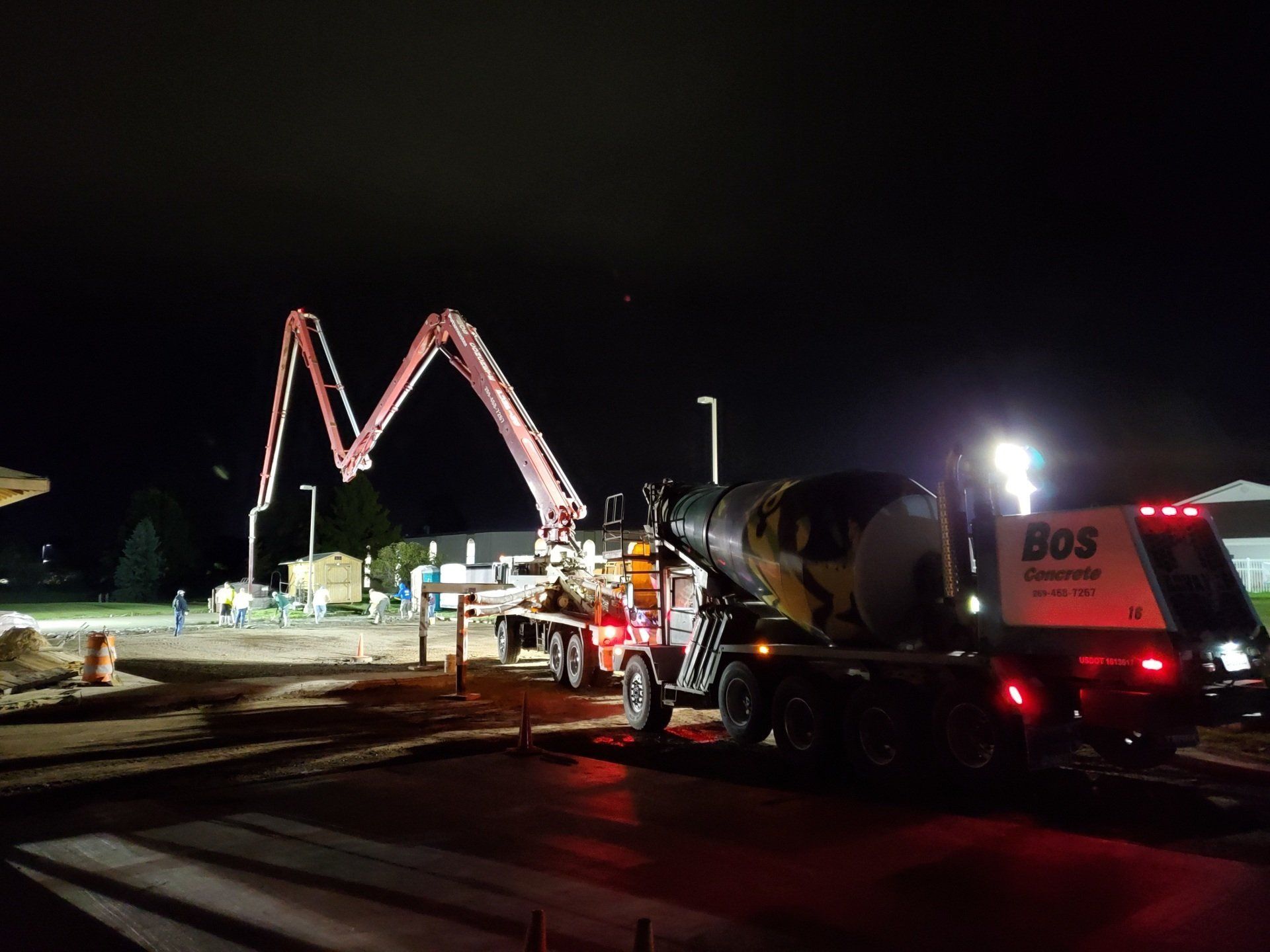
If you have a job that requires a concrete pour in Kalamazoo, Plainwell, Benton Harbor, or South Haven, MI, contact us at Box Concrete. We can get our ready-mix to your job and even supply you with pump trucks that fit the tightest spaces.