Concrete for Commercial Loading Docks: Strength, Heavy Truck Traffic, and Durability
Commercial Loading Dock Concrete: Planning for Heavy Truck Traffic
Commercial loading docks need concrete that can support the daily movement of loaded trucks, trailers, forklifts, and material-handling equipment. These are active work areas where repeated traffic, concentrated loads, outdoor exposure, and tight operating schedules place constant demands on the pavement.
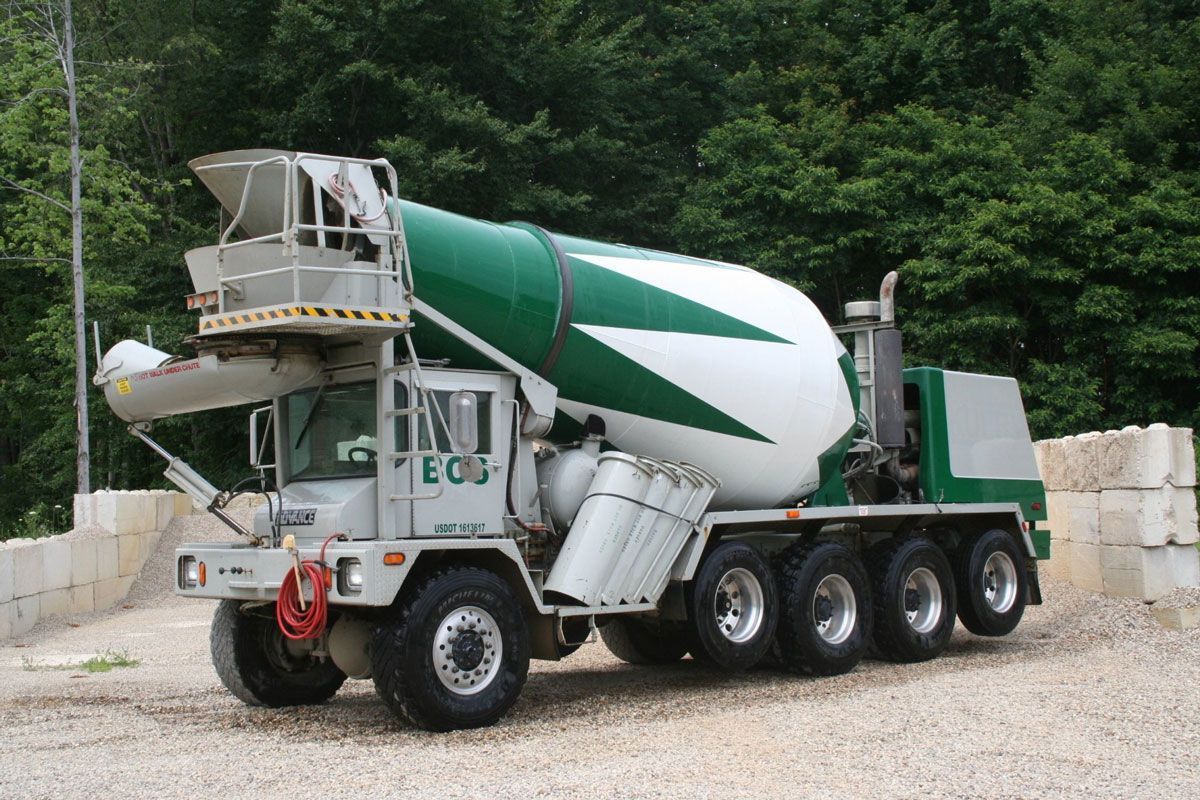
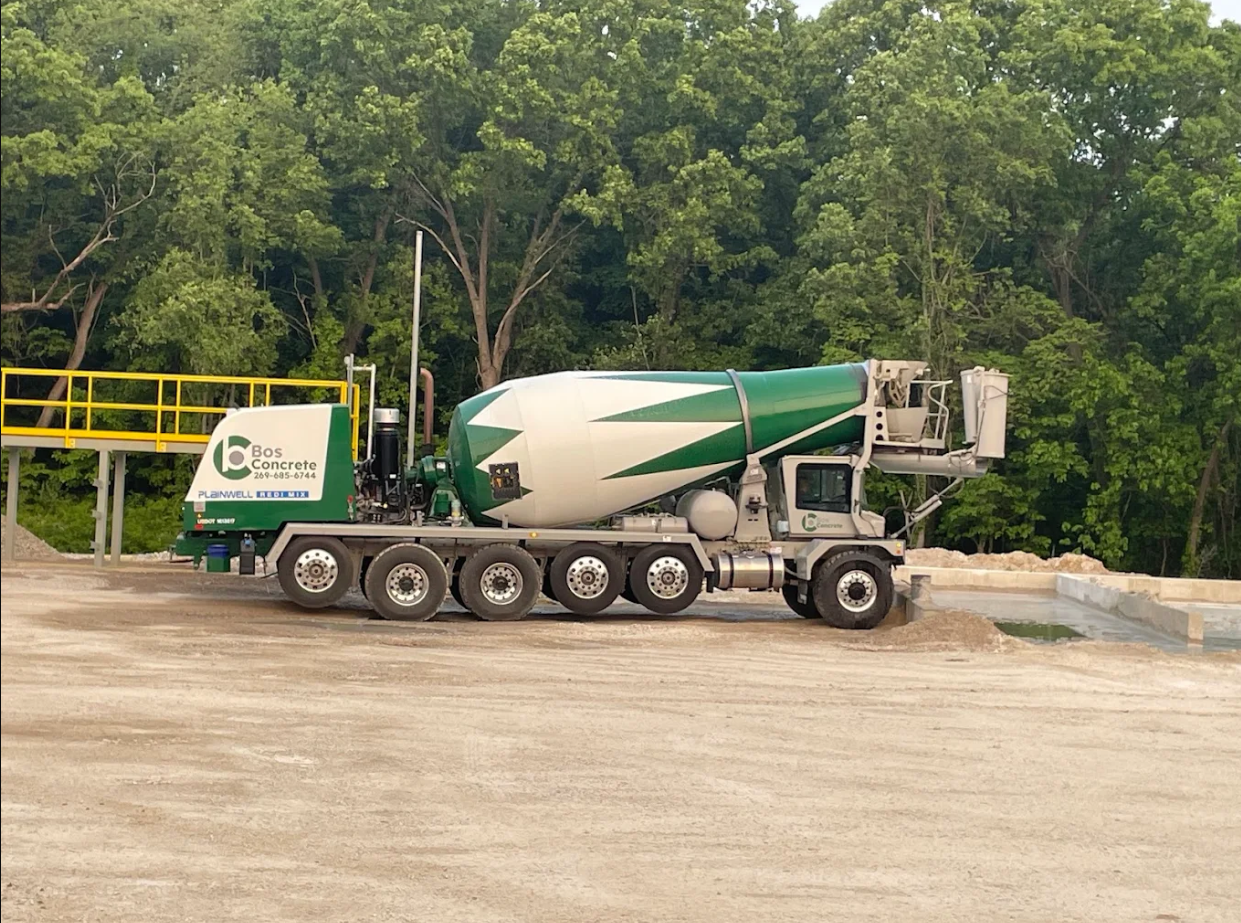
Bos Concrete supplies ready-mix concrete for loading docks and surrounding truck courts at warehouses, distribution facilities, manufacturing plants, and logistics properties throughout the Southwest Michigan area. Our team coordinates custom concrete production, scheduled delivery, and boom pumping around the size and requirements of the project.
Concrete Built for Work Around the Loading Dock
A commercial loading dock is more than the point where a truck backs up to a building. It is part of a larger operating area that may include truck approaches, loading lanes, trailer parking, dock aprons, driveways, staging areas, and transitions into the facility.
Concrete in these areas must support several types of traffic. Semi-trucks may repeatedly turn, brake, and reverse along the same paths. Loaded trailers can remain parked at dock positions for extended periods. Forklifts and pallet-moving equipment may cross between the facility and trailers throughout the day.
That combination creates different demands than an ordinary parking lot. Loading-dock concrete must be planned around the expected vehicle weights, traffic frequency, placement area, outdoor exposure, and daily use of the facility. The project engineer determines the structural requirements, while Bos Concrete supplies the ready-mix according to the approved specifications.
Loading Dock Concrete for Warehouses & Distribution Facilities
Warehouse and distribution operations depend on a steady flow of deliveries. Their loading areas may serve incoming materials, outgoing products, fleet vehicles, third-party carriers, or all four at once.
A new warehouse may require concrete for the dock apron, truck court, building foundation, interior floor, loading lanes, and adjoining pavement. An existing distribution facility may need new dock positions, an expanded staging area, or replacement concrete in a high-traffic section.
These projects often involve large placements and closely coordinated construction schedules. Concrete deliveries must match the rate at which the crew can place and finish the material. If the pour extends across a wide area, boom pumping may help maintain an efficient placement flow without moving mixer trucks through every part of the site.
Bos Concrete has the production capacity, mixer-truck fleet, and pumping equipment to support both individual loading-dock improvements and larger warehouse construction projects.
Concrete for Manufacturing Plants & Logistics Operations
Manufacturing plants place their own demands on loading-dock concrete. Raw materials, parts, finished products, heavy equipment, and service vehicles may all move through the same area. A dock can remain active across multiple shifts, leaving limited time for construction or expansion work.
Logistics companies face similar pressure. Their properties are designed around frequent truck arrivals, organized trailer movement, efficient loading, and predictable departure schedules. Concrete failure in a main traffic lane or dock approach can disrupt those operations and restrict access to part of the facility.
Planning may need to account for:
- Loaded semi-trucks & trailers
- Repeated turning and braking
- Trailer staging & parking
- Forklift crossings
- Dock aprons & approach lanes
- Outdoor equipment pads
- Fleet service areas
- Multi-shift facility operations
Bos Concrete works with contractors and project teams to schedule ready-mix production and delivery around the planned pour. For work at an operating facility, concrete may be placed in phases so construction can proceed while other loading positions or traffic lanes remain available.
Strength for Heavy Truck Traffic
Loading-dock concrete must be designed for the traffic it will actually carry. A passenger-vehicle parking area and a truck court serving loaded trailers do not place the same demands on the pavement.
The project engineer may consider vehicle weight, axle loading, traffic volume, slab thickness, reinforcement, base preparation, drainage, and joint placement. Areas where trailers park or trucks follow the same turning path may require different considerations than lightly traveled portions of the property.
Bos Concrete prepares commercial and industrial mixes according to the specifications supplied for the project. Depending on those requirements, the mix may be adjusted for strength, workability, setting characteristics, weather conditions, or the planned placement method.
Mix consistency also becomes important during large pours. When several trucks are supplying one loading area, each load must match the approved project requirements. Accurate batching and coordinated delivery help the placement crew maintain a consistent workflow from the first load through the final section.
Durability for Southwest Michigan Conditions
Commercial loading docks remain exposed to weather while carrying some of the heaviest traffic on the property. Rain, snow, freezing temperatures, moisture, and deicing materials can all affect exterior concrete.
Long-term durability begins with the complete pavement system. Proper base preparation supports the slab, while drainage helps keep water from collecting near dock approaches, pavement edges, and traffic lanes. The specified concrete mix must also suit the expected exposure conditions.
Placement and curing are equally important. The crew needs enough time and access to consolidate, finish, and cure the concrete correctly. Heavy trucks and trailers should not return to the new pavement until the project team determines that it has developed sufficient strength.
These steps help the completed loading area withstand daily operations instead of becoming an ongoing maintenance problem for the facility.
Coordinated Delivery & Boom Pumping
Large loading-dock pours require coordination between the concrete supplier, contractor, finishing crew, equipment operators, and facility representative. Before delivery begins, everyone should understand the pour sequence, estimated volume, truck route, staging area, placement rate, and operating restrictions around the property.
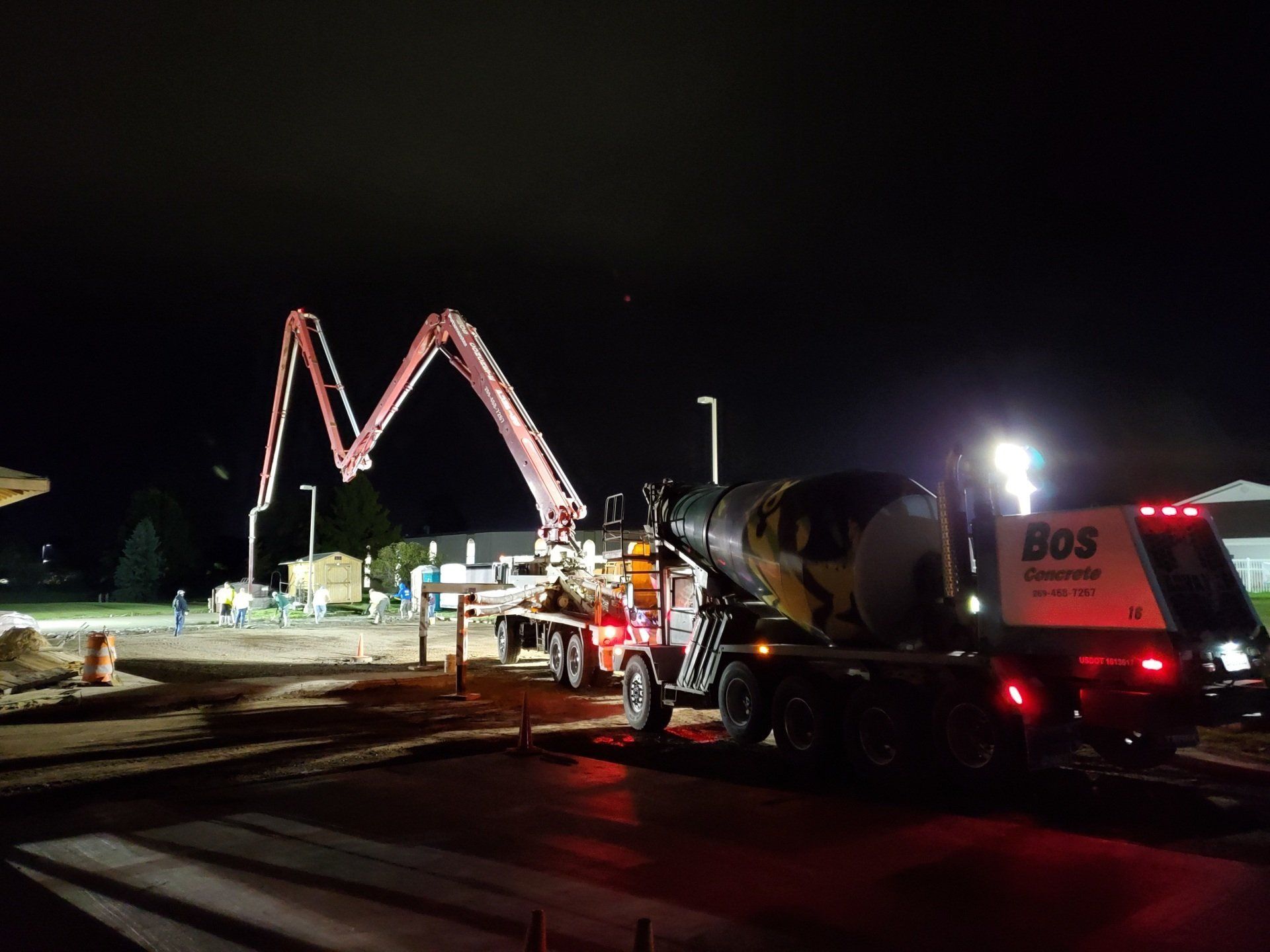
A boom pump can help when buildings, dock structures, excavations, reinforcement, or active traffic prevent mixer trucks from reaching the placement area. Bos Concrete operates 38-meter Z-boom pumps that can move concrete across obstacles and place it closer to the crew.
Coordinating ready-mix delivery with pumping service can support a steadier placement process. Mixer trucks discharge into the pump from a planned location while the boom directs concrete across the slab area. This approach can be especially useful for wide truck courts, restricted dock aprons, reinforced foundations, and sites where minimizing equipment movement is important. Bos Concrete provides boom pumping only.
Plan Your Southwest Michigan Loading Dock Project
Bos Concrete has supplied commercial and industrial concrete throughout Southwest Michigan since 2000. We provide custom ready-mix production, concrete delivery, and boom pumping for loading docks, truck courts, warehouse slabs, manufacturing facilities, distribution centers, and logistics properties.
If you are planning a loading-dock project in Kalamazoo, Benton Harbor, Paw Paw, or South Haven, contact Bos Concrete before the scheduled pour. Provide the project specifications, estimated volume, delivery schedule, placement sequence, and site-access details so our team can prepare the ready-mix production and delivery plan.